COP27: Tears of joy or more frustration?
However at Ubuntu HQ, we had our optimistic hats on and recently published a blog detailing what we wanted to see achieved in Sharm el-Sheikh.
With the final day over and some progress appearing to be made, let’s get into the nuances of whether COP27 was yet another farce or a potential turning point.
The good
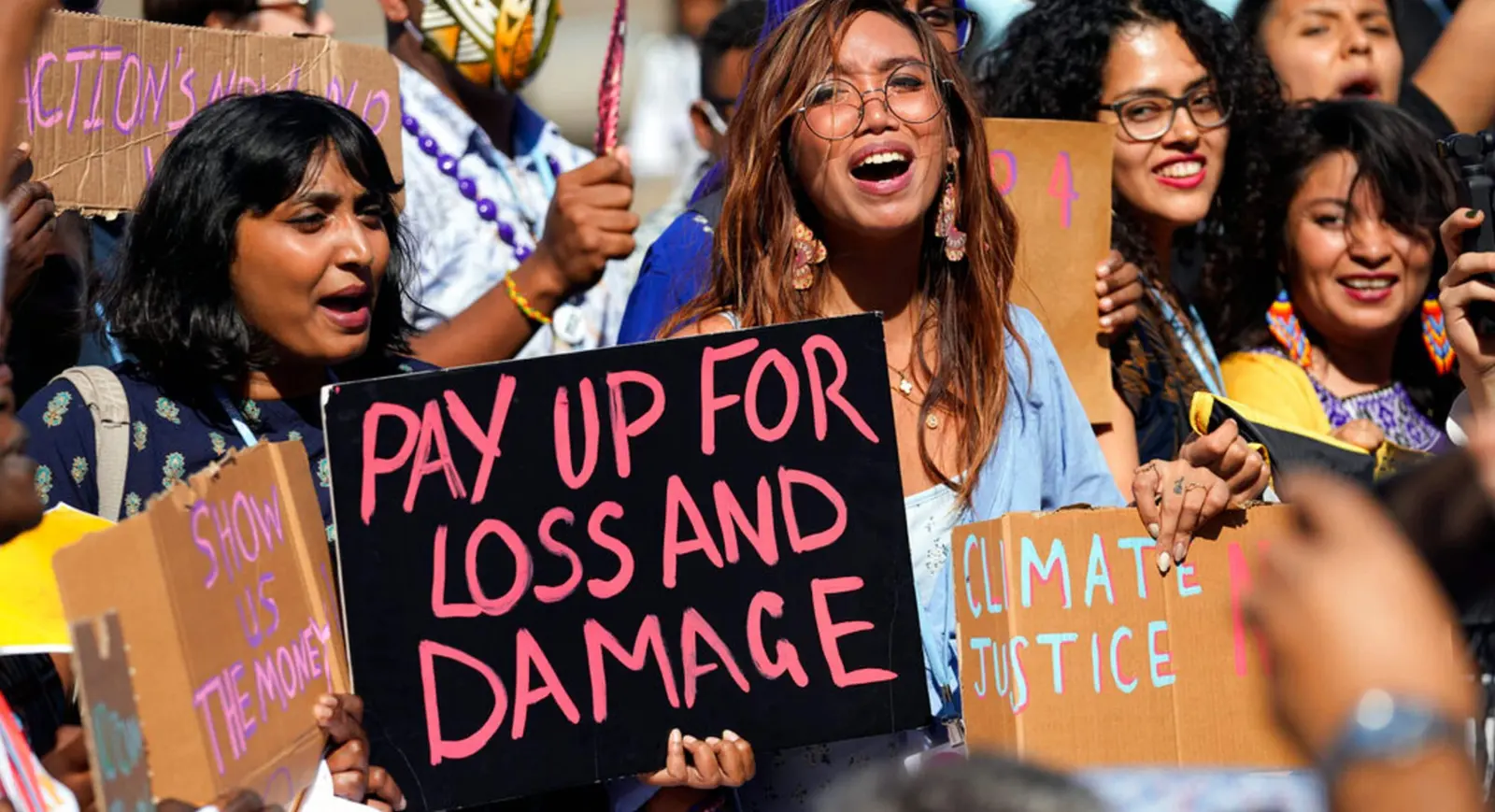
We’ll start with the good news. Back before the start of the summit, at the top of our list of ‘must haves’ was a ‘Loss and damage’ fund — a pot of money that would provide compensation for countries affected by climate change in ways that cannot be mitigated or stopped, such as flash floods or droughts. These countries have been demanding financial support for the past thirty years, however wealthier countries (particularly the US and Europe) have always blocked the proposal in fear of opening future legal repercussions through ‘admission of guilt’.
Although only coming through in the dying minutes (in true COP style), a breakthrough was achieved when the Egyptian presidency shepherded it onto the office Sharm agenda, resulting in a historic agreement in which many of the opposition reversed their stances. A transitional committee will be formed, with representatives from 24 countries, that will work to establish how the fund should work, and where the money should come from.
In one year’s time at Cop28, to be hosted in Dubai, the committee will present its recommendations, with a view to get the fund up and running.
While there are admittedly still big details to iron out, the result is a positive one. It’s logical (and moral) that less wealthy nations who are going to suffer from the effects of climate change sooner and in a more extreme fashion, should be compensated by those who have historically caused the vast majority of the problem.
To add to this, a report jointly commissioned by the governments of Egypt and the UK said that annual investments in emerging markets and developing countries (other than China) to cut emissions, boost resilience and deal with loss and damage caused by climate change should exceed $2 trillion by 2030. The report also called for grants and low-interest loans from the governments of developed countries to double from $30 billion annually today to $60 billion by 2025.
The bad
However it’s not all good news. COP27 has kept the goal of keeping the global temperature increase at 1.5C alive, but only barely — and arguably, pointlessly as it’s believed to be firmly out of the realms of reality. At last year’s Cop26 in Glasgow, there was a call to push for a specific target of 1.5C instead of vague statements like “well below 2C” that had previously been discussed in the Paris Agreement back in 2015. This led to an agreement that countries would “revisit and strengthen” their 2030 climate ambitions to put realistic mechanisms in place to achieve the goal.
Unfortunately in the past year, only a limited number of countries have done as they said. In fact, the emission-reduction plans submitted in advance of COP27 would take a tiny 1% off of projected global emissions in 2030, compared to the 43% that scientists state needs to be cut by the end of the decade.
Whilst a number of countries did push for the final Sharm El-Sheikh agreement to include a reference of the need to peak emissions in 2025, the final submitted text did not include this. Alok Sharma, the Cop26 president, did not hold back on the outcome. “Emissions peaking before 2025, as the science tells us is necessary. Not in this text.”
The ugly
To add insult to injury, the final COP27 decision also didn’t call for the winding down of fossil fuel usage, which is the primary cause of the global climate crisis. The Sharm agreement repeated the call for “accelerating efforts towards the phasedown of unabated coal power and phase-out of inefficient fossil fuel subsidies” — merely a repetition of the statement made in Glasgow.
Earlier in the week, India (supported by the European Union and several countries) proposed a statement on “phasing down” all fossil fuels. This was followed by the High Ambition coalition making a final push for the COP27 pact to push the world towards phasing out all fossil fuels, however the move received strong pushback from countries with economies reliant on extracting oil.
Sadly, the only real mention of ‘the war on nature” that we could find was acknowledgement that deforestation in the Congo Basin rainforest (the world’s second biggest rainforest) increased by 5% in 2021, with the worst being in the Central African Republic where there was a 71% increase.
So what next?
We hate to be all doom and gloom, but it’s starting to feel like Greta was right.
The ironies of COP27 being sponsored by Coca Cola (the top plastic polluter globally, according to NGO Break Free from Plastic) and the next host being Dubai (located in a region made incredibly wealthy through the extraction of fossil fuels) are not lost on us. Whilst it was great to see the Loss and Damage fund being established, we can’t help but feel that decisive action is not being taken quickly enough. This is compounded by the fact that oil and gas lobbyists outnumbered almost every single national delegation at the summit.
As Tina Stege, the Marshall Islands’ climate envoy stated: “This COP decision must put the world on a path to phasing out all fossil fuels, and an urgent just transition to renewables.” We can only hope it happens sooner rather than later.
Whilst these glamorous affairs are happening, small nations such as Tuvalu have decided to upload a virtual copy of itself to the metaverse to preserve its history, culture and identity as rising sea levels due to climate change threaten to submerge it completely. You can’t really get more depressing than that.
Despite all of this, we still believe that the COP events are necessary, even if purely to generate discussion and positive change as a result of anger due to their lackluster results. Looking to the future, we hope factors such as Lula Da Silvio’s recent presidential victory in Brazil will have a positive effect on the future of our planet, and we refuse to lose hope!
We just hope you — and world leaders — won’t either.