Antalya and the word nobody would say
COP31 ended without a deal after fossil fuels were edited out of the text. A non-decision is never neutral. Someone always pays for it, and we know who.
On the final night in Antalya, after two extra days of talks in what was reported as the longest negotiation in the history of the UN climate process, the text in front of delegates mentioned electricity, carbon capture, adaptation and finance. It did not mention fossil fuels.
That absence is the story of COP31. Not a clash of grand visions, not a dramatic walkout, but a word that a handful of governments would not allow on the page, in a world where that word describes the main cause of the problem the meeting existed to solve.
In the end there was no agreement at all. Small island states and a coalition of European and Latin American countries refused to sign a text that left fossil fuels out, and because the UN process runs on consensus, their refusal was enough. The summit closed on 22 November without its signature decision. Its president, Türkiye’s Murat Kurum, summed up the mood: “There is nothing to do. We did all that we could.”
What fell away
It is worth being precise about what was lost, because the drafts tell the story better than the speeches. The first, published on 16 November, called for an “immediate transition away from fossil fuels in energy systems.” Within days, every reference was gone. What survived was a goal to raise electricity’s share of final energy to 35% by 2035, and an aspiration to capture carbon at “gigatonne scale” within the same decade.
Read together, those two lines are revealing. Electrify more, and catch the carbon from whatever you keep burning. It is a picture of the future in which the fuels themselves are never named, never limited and never retired. Only managed.
The money moved the same way. An early draft proposed at least $120bn a year for adaptation by 2035: the funding that pays for sea walls, drought-resistant farming and early-warning systems. It was subsequently dropped. In its place sat a promise of “efforts” to triple adaptation finance, and a new roadmap, from Antalya to Addis Ababa, to work out how.
Three years ago in Dubai, almost every government on Earth agreed for the first time to transition away from fossil fuels. It was late and it was hedged, but it was said. The Bahamas’ prime minister, Philip Davis, reminded the room of it in Antalya.
Three years ago in Dubai, the nations of the world agreed by consensus to transition away from fossil fuels in their energy systems.
Philip Davis, Prime Minister of the Bahamas
Antalya was meant to turn that sentence into a plan. Instead, it could not bring itself to repeat it.
The politics of a missing word
It would be easy to tell this as a story of villains, and plenty of people have. Ireland’s climate minister, Darragh O’Brien, called it “unconscionable” to have a climate pact that makes no mention of fossil fuels. Panama’s Juan Carlos Navarro said the talks were “being held hostage by the petroleum mafia.”
The anger is earned. But the villain story, satisfying as it is, misses something. The fossil fuel economy isn’t a few governments in a negotiating room. It is the economy, more or less everywhere. It funds pensions and public budgets, it keeps the lights on in places that have no other option yet, and it underwrites political careers in every bloc. The governments that resisted the word were saying out loud what many others quietly fear: that naming the problem commits you to ending it, and nobody has yet agreed who pays for the ending.
That is the real fault line, and it doesn’t run neatly between good countries and bad ones. It runs between those who can afford the transition and those who can’t, and between those who caused the problem and those who are living in it.
Nor did the word’s loudest champions escape criticism. Mohamed Adow, of Power Shift Africa, said “rich countries blocked the creation of a just transition mechanism”: the machinery that would help poorer nations move off fossil fuels without wrecking their economies. Everyone, it seems, wants the transition. Fewer want the bill.
Australia’s Chris Bowen, who presided over the negotiations, spoke of “unbridgeable red lines”. The phrase is accurate, and that is the problem. A process that requires the agreement of nearly 200 countries hands every one of them a veto over the pace of change for all the others.
Who pays for nothing
A non-decision feels neutral. It isn’t. The atmosphere doesn’t wait for consensus, and the cost of another year without a plan does not fall evenly.
Look at who has been burning carbon, and for how long. The United States alone is responsible for around a fifth of all the carbon dioxide emitted since 1850. Africa, home to nearly a fifth of humanity, accounts for less than 7%, and nearer 5% once the emissions of the colonial era are counted against the empires that ran it, according to analysis by Carbon Brief.
That last detail matters. The industrial revolution that built Europe’s wealth wasn’t powered by coal alone. It ran on cotton, sugar, rubber and minerals taken from colonised lands, by people who saw little of the prosperity that followed. Those same regions now stand on the front line of the warming those centuries set in motion: the floods, the failed harvests, the heat that makes outdoor work unbearable for weeks of the year.
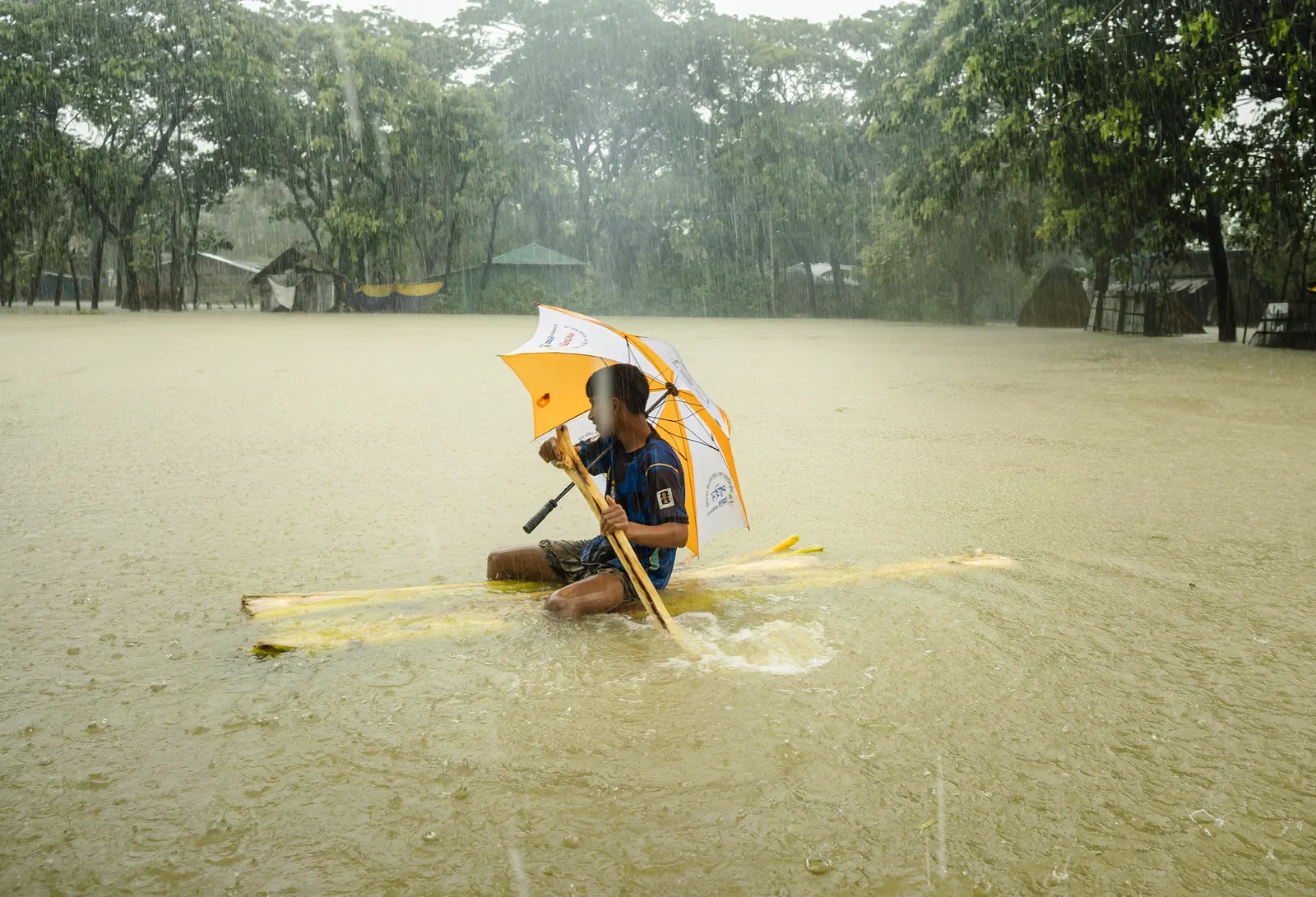
Bangladesh shows what that looks like in practice. As the planet warms, its monsoon rains are growing heavier and harder to predict, and this July they left homes and roads across Chattogram under water. The country has contributed a sliver of the world’s emissions. It will spend a generation adapting to everyone else’s.
This is why the vanished adaptation figure stings more than any single word. For a delegate from a small island or a river delta, finance isn’t a bargaining chip. It is the difference between a sea wall built this decade and a community moved the next. Developing countries called what was on offer too little and too slow. They were being polite.
There is no ambiguity in the science.
António Guterres, UN Secretary-General
No decision is a decision
There is a comfortable reading of Antalya that says the process failed but the transition carries on regardless. Solar and batteries keep getting cheaper. Electric cars keep selling. Markets are moving faster than diplomats. Some of that is true, and it is genuinely hopeful.
But markets move fastest for those who already have capital, grids and good credit. The transition happening without the UN is a transition for the rich world first. The point of a global agreement was never only to set targets. It was to decide, together, how the cost of change would be shared. Without one, that cost falls to the people least able to carry it, as it always has.
Delay is also a decision about infrastructure. Every year without a clear signal is another year of new oil and gas fields approved, new pipelines financed and new plants built to run for decades. Those choices lock in emissions long after the politicians who made them have left office. The absence of a plan is, in effect, a plan to keep going.
Where this leaves us
It would be wrong to call this the end of climate diplomacy. In April, nearly 60 countries met in Santa Marta, Colombia, for the first international conference on transitioning away from fossil fuels, co-hosted by Colombia and the Netherlands. It produced no binding treaty, but it set up working groups to help countries draw up national plans, and a second conference is due next year.
That may be where the real work now happens: among coalitions willing to move faster than consensus allows, while the UN process keeps everyone else in the room. It is an imperfect arrangement. It is still better than pretending that a text with nothing in it is a step forward.
The UN’s climate chief, Simon Stiell, said he shared “the deep disappointment of many.” Disappointment is the polite word. The more honest one is cost. Every summit that cannot name the cause of the crisis pushes the price of the crisis onto someone else, and we have known for a long time whose door it lands at.
Antalya didn’t fail because the world doesn’t know what to do. It failed because the people who would have to do it, and pay for it, couldn’t agree to say so. Next year the talks move to Addis Ababa, on a continent that did the least to cause this and has the most to lose from another year of nothing. They will have to begin where this summit could not: with the word.
Photograph: “Adrift in the Flood” by Md Shameem ul Islam, licensed under CC BY 4.0, via Wikimedia Commons. Cropped for this page.
